
Poppy Playtime Chapter 4 Hazards & Environment — Survive the Safe Haven
Most players think Chapter 4’s horror comes from something chasing them.
Wrong.
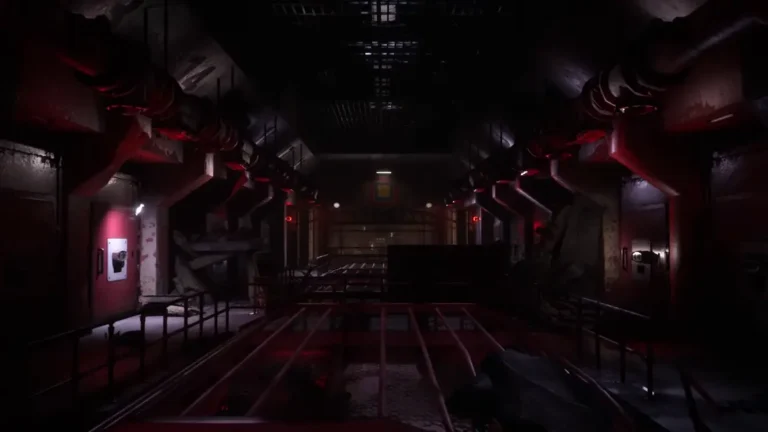
The environment itself is the predator.
Safe Haven is not a map.
It’s an organism that consumes speed, impatience, and noise.
Below is the survival doctrine used by people who don’t die in the first hour.
1. The Corridor Trap — Speed is a Weapon Against You
Corridors are not “paths.”
They are pressure tunnels.
Long, narrow spaces create:
- Limited reaction windows
- No lateral escape
- Velocity panic
- Sound amplification
The faster you run, the louder you become.
Noise is not cosmetic — it is data.
Most deaths in Safe Haven aren’t caused by enemies.
They’re caused by a player sprinting when they should be breathing.
Rule:
If a corridor looks safe, it isn’t.
Control your speed or the environment will expose you.
2. Dead Floors — Surfaces That Tell a Story
Safe Haven teaches through flooring, not tutorials.
You will encounter:
- slick tiles
- corroded steel
- rubberized industrial flooring
- exposed insulation layers
Each has physics.
Slippery floors reduce turn control.
Industrial rubber slows acceleration.
Cracked tiles telegraph footsteps to surrounding space.
Exposed metal carries vibration like a signal.
Players who “just move” lose.
Players who read the floor survive.
3. Visibility Lanes — The Light is Not Your Friend
Chapter 4 weaponizes light.
Bright zones:
- telegraph your silhouette
- kill stealth
- amplify body outline through vents
Dim zones:
- hide you
- mute sound
- allow deliberate navigation
And then there’s false visibility:
- bright entrance with dark kill zone behind
- misaligned shadows
- camera-friendly corners
The worst spot in a horror game isn’t darkness.
It’s the space where you think you’re safe because you can see.
4. Acoustic Traps — The Facility Listens
The sound system in Chapter 4 is mechanical, not cinematic.
Fans drone to mask footsteps.
Pipes expand to test your patience.
Vents breathe like lungs.
The environment has rhythm.
Safe Haven uses noise in two ways:
4.1 To make you misjudge distance
You hear something loud → assume threat → sprint → lose positional advantage.
4.2 To bait you into rushing
Audio crescendos make inexperienced players run into blind corners.
The smartest players do this:
Stop.
Wait.
Let the sound settle.
Move during silence, not during comfort.
5. The Vertical Kill — Anything Above You Owns You
New players only watch the floor and the hallway.
Veterans watch the ceiling.
Cables above you hum.
Grates overhead leak dust.
Vent shafts change tone depending on presence.
If something is above you,
you won’t hear it clearly —
you’ll hear its environment reacting.
Look up, not forward.
6. The Corner Problem — False Safety Zones
Most environments reward hugging walls.
Safe Haven punishes it.
Corners are:
- trap points
- sound chambers
- visibility blindspots
- funnel nodes
Standing too close to a corner gives you:
- no backstep space
- no turn radius
- no reaction window
The correct play isn’t to hug the wall.
It’s to enter diagonally so you control the angle.
Every corner is an ambush trigger until proven otherwise.
7. Decompression Areas — The Worst Lie in the Facility
You’ll find spaces that look “safe”:
- benches
- wide rooms
- empty storage areas
- maintenance alcoves
They exist for one reason:
To destabilize your nervous system.
You relax → you get sloppy → you die.
Your brain expects danger in small spaces.
Chapter 4 flips that instinct.
The big rooms are where your discipline dies.
8. The Facility’s Memory — You Are Not the First
Safe Haven behaves like a system that has already failed before you arrived.
Lockers blocked with debris
Barred hatches
Burned corners
Unfinished repairs
These are not “aesthetic details.”
They are death logs from previous attempts.
If you see a corridor that has heavy damage:
- Something tried moving through there
- It failed
- It forced someone to barricade
The world teaches you without speaking.
Ignore it and you become the next entry.
9. Don’t Trust Static Spaces
The map changes without moving.
A hallway is not dangerous because something enters it.
It’s dangerous because something might already be in it, waiting.
Safe Haven isn’t haunted — it’s opportunistic.
The threat isn’t movement.
The threat is potential.
You move.
It reacts.
You panic.
You die.
This is how the environment wins.
10. You Beat the Map, Not the Beasts
Players spend 90% of their brainpower on enemies.
It’s a mistake.
Chapter 4’s creatures are predictable:
- They respond to stimuli
- They escalate in patterns
- They follow environmental rules
The environment?
It doesn’t care about your logic.
It only cares about punishing:
- haste
- noise
- greed
- overconfidence
- tunnel vision
The ones who survive are not the fastest players.
They are the ones who respect the terrain.
Final Lesson
Safe Haven is not designed to kill you.
It’s designed to let you kill yourself.
It waits for panic.
It rewards impatience.
It punishes instinct.
The environment is the first enemy.
Everything else arrives later.
Read our Chapter 4 Movement Theory guide