Experiment 1006 Poppy Playtime —
Who Is The Prototype, Abilities & Weakness
Experiment 1006 — known as The Prototype — is the most dangerous and
least understood entity in Poppy Playtime. Unlike other experiments
driven by instinct, the Prototype operates with calculated intelligence,
coordinating events across multiple chapters from the shadows. What is
Experiment 1006 in Poppy Playtime? It is the hidden architect behind
Playtime Co., identifiable by its distinctive appearance — including
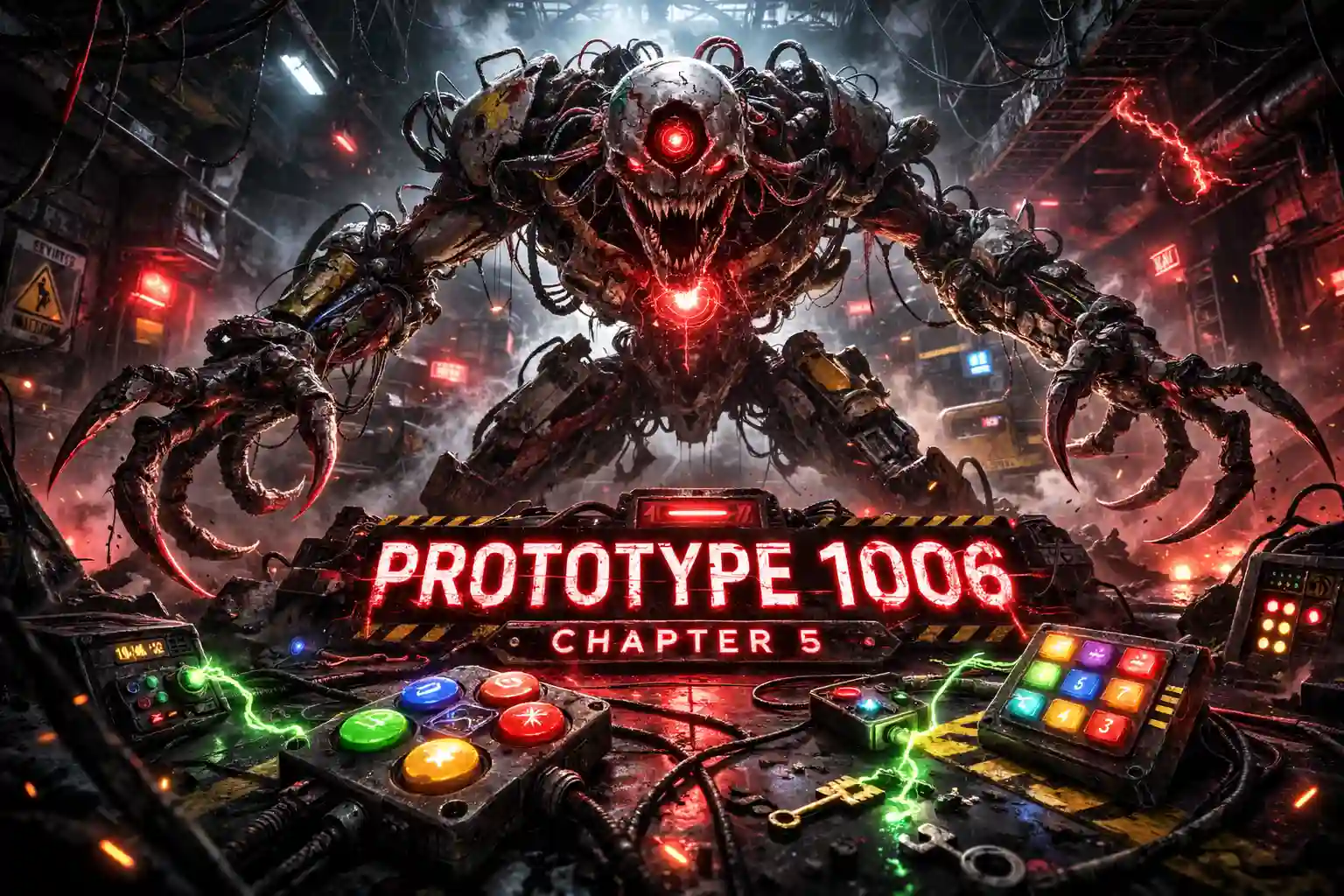
its iconic legs — and its terrifying Chapter 5 final form. This page
covers everything confirmed: the Prototype’s full abilities, weakness,
visual details, and every lore clue pointing to its true role inside
Playtime Co.
Short answer: Experiment 1006 (The Prototype) has no single confirmed weakness in Poppy Playtime — but Chapter 5 points to two canonical counters: a Negation Compound that neutralizes its regenerative systems, and salvaged mechanical components it relies on for indirect control. It is powerful but not invulnerable.
Who Is Prototype (Experiment 1006)?
Experiment 1006 is widely believed to be the most advanced creation within Playtime Co.’s secret experimentation program. While official documentation remains fragmented, what is clear is that Prototype differs fundamentally from other toys.
In official Playtime Co. documentation, Prototype is designated as Experiment 1006 — often referred to simply as “The Prototype.” Within the broader Poppy Playtime lore, 1006 represents the most advanced and structurally autonomous experiment observed so far. Unlike consumer-facing toys, Experiment 1006 appears engineered for strategic function rather than public interaction.
Most experiments exhibit enhanced aggression or emotional distortion. Prototype, however, demonstrates:
- Strategic intelligence
- Environmental awareness
- Adaptive behavior
- Resource utilization
This suggests that Experiment 1006 was not merely designed to function — it was designed to think.
Unlike Huggy Wuggy or Mommy Long Legs, Prototype is rarely seen directly. Instead, its presence is inferred through aftermaths: dismantled parts, recovered components, and coordinated environmental changes. This absence amplifies its authority.
Prototype does not need to appear constantly. Its influence is enough.
The Origin of Experiment 1006 Inside Playtime Co.
While exact details of its creation remain unclear, Experiment 1006 appears to represent a late-stage escalation in Playtime Co.’s internal experimentation efforts.
Earlier toys were designed for consumer markets, even if modified internally. Prototype, however, lacks any sign of public-facing design. There is no marketing angle. No child-friendly aesthetic. No commercial positioning.
This suggests:
- It was never meant for public release
- It may have been part of a classified internal objective
- Its purpose extended beyond toy manufacturing
The numbering itself is telling. “1006” implies a long sequence of experimentation. By this stage, Playtime Co. may have shifted from creating toys to pursuing artificial autonomy.
Prototype may not be a product.
It may be an experiment in control.
Structural Timeline of Prototype’s Influence
Understanding Prototype requires viewing events as a progression rather than isolated chapter incidents.
Phase 1 – Silent Observation
In early chapters, Prototype’s role is subtle. Environmental inconsistencies suggest a hidden force operating behind visible threats. While Huggy Wuggy appears to be the immediate antagonist, the larger structure of events feels coordinated.
This period establishes Prototype as a watcher rather than an aggressor.
Phase 2 – Strategic Retrieval
As fallen experiments disappear and mechanical parts are removed, evidence points toward deliberate collection. Something is salvaging components. This behavior implies planning and long-term intention.
Prototype appears less like a rogue toy and more like an entity rebuilding itself.
Phase 3 – Environmental Adaptation
By later chapters, the factory environment feels reorganized. Power systems shift. Areas become selectively accessible. The ecosystem of the factory reflects hierarchy.
This suggests that Experiment 1006 may be influencing structure itself.
Phase 4 – Escalation Toward Revelation
In Chapter 4, the scale of implied control increases dramatically. Other experiments seem positioned within a broader structure rather than acting independently.
At this stage, Prototype transitions from background theory to central narrative force.
Prototype’s Role Across the Chapters
Chapter 1 – The Unseen Controller
Chapter 1 introduces visible danger but hints at deeper coordination. While Huggy Wuggy dominates attention, the aftermath suggests larger systems at play.
Prototype’s role here is subtle but foundational.
Chapter 2 – Expanding Manipulation
The structure of encounters begins to feel orchestrated. Events unfold with pacing that implies oversight rather than chaos.
The theory that Experiment 1006 is guiding outcomes gains strength.
Chapter 3 – Psychological Expansion
The horror shifts from isolated threats to systemic control. Environmental storytelling increasingly reflects hierarchy.
Prototype’s shadow grows larger.
Chapter 4 – Consolidated Authority
In Chapter 4, the factory feels unified under silent command. The scale of tension increases not because enemies are stronger, but because structure feels controlled.
For a deeper look at how Chapter 4’s pacing reinforces this hierarchy, see the full Chapter 4 breakdown available on poppyplaytime4.org.
Prototype’s presence becomes central rather than speculative.
Abilities and Behavioral Analysis
Prototype’s true danger lies not in brute strength, but in intelligence.
Strategic Patience
Unlike impulsive experiments, Prototype demonstrates restraint. Timing appears deliberate. Engagement is calculated.
Salvage and Reconstruction
Evidence strongly suggests that Experiment 1006 repurposes parts from fallen toys. This indicates mechanical capability and strategic resource awareness.
Adaptive Learning
Changes between chapters suggest learning behavior. Environments evolve. Systems adjust. Threat placement becomes increasingly refined.
This aligns with artificial intelligence escalation rather than random mutation.
Psychological Dominance
Prototype influences tension without constant confrontation. Its power lies in anticipation. The player feels watched rather than attacked.
That sustained unease elevates Prototype beyond a traditional antagonist.
Physical Structure and Size
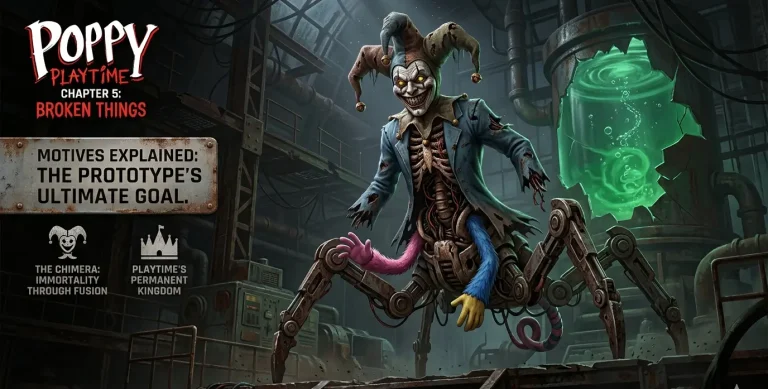
While Prototype’s full body has not been clearly shown, visible limbs suggest a large mechanical frame significantly exceeding the size of standard toy experiments. The clawed appendage seen in previous chapters indicates reinforced industrial construction rather than soft toy material. Exact height remains unconfirmed, but available scenes imply a towering, multi-segmented build designed for strength and retrieval operations.
Potential Weaknesses
No explicit weakness for Experiment 1006 has been officially confirmed. However, narrative patterns suggest that Prototype relies heavily on indirect manipulation rather than direct confrontation. This may indicate that its physical form, while powerful, is not invulnerable. Additionally, its dependence on salvaged components implies mechanical limitations that could become exploitable within future chapters.
Relationship With Other Experiments
Prototype’s relationship with other toys suggests hierarchy.
Huggy Wuggy
Huggy may represent an enforcer rather than a leader. His aggression contrasts sharply with Prototype’s calculation.
Mommy Long Legs
Her structured challenges and manipulative tone imply alignment with a broader system.
CatNap
The psychological intensity of later chapters strengthens the argument for centralized coordination.
If Prototype is Experiment 1006, it may occupy the apex of Playtime Co.’s internal power structure.
Prototype’s Weaknesses — Canonical Clues & What They Mean
There is no single official “one-shot” weakness. Still, Chapter 5 and related files provide two repeatable clues that players and analysts use as practical counters:
- Negation Compound (Chapter 5 hint): game documents and recent guides reference a “Negation Compound” that neutralizes regenerative mediums — this is the most direct in-game hint for a suppression method.
- System Backup / Override: Chapter 5’s “Backup” material acts as a fail-safe that contains Prototype’s vulnerability; narrative files show the backup can neutralize or restore systems opposing Prototype.
- Mechanical dependence: Prototype salvages parts and rebuilds — meaning targeted destruction of key mechanical components or systems that it relies on could be effective (in-game reasoning & community analysis).
Confirmed Lore vs Fan Theories
Separating fact from speculation is essential.
Confirmed
- Experiment 1006 exists within official documentation.
- It exhibits intelligence beyond typical experiments.
- It appears connected across chapters.
Theories
- Prototype controls all surviving experiments.
- It was once human.
- It seeks factory-wide autonomy.
- It is preparing for a full reveal in Chapter 5.
While confirmation remains limited, the escalation pattern supports growing centrality.
Prototype’s Role in Chapter 5
Chapter 5 reinforces Prototype’s position as the central intelligence within Playtime Co. Rather than remaining purely theoretical, the narrative escalation confirms that Experiment 1006 operates with long-term strategic intent. Environmental restructuring, coordinated experiment positioning, and deeper factory access all align with Prototype’s expanding influence.
While full physical confrontation remains limited, Chapter 5 strengthens Prototype’s role as the structural architect behind the factory’s hierarchy.
Why Prototype Matters to the Larger Story
Prototype shifts the series from episodic survival to centralized narrative architecture.
Without a central intelligence, each chapter risks feeling disconnected. With Experiment 1006 operating behind the scenes, the factory becomes a controlled ecosystem.
This evolution deepens the franchise’s psychological weight and long-term storytelling potential.
Prototype is not just another enemy.
It is the structural backbone of tension.
What Is Prototype’s Goal?
Based on available lore, Experiment 1006 appears driven by structural control rather than random destruction. Its actions suggest a long-term objective involving autonomy, consolidation of surviving experiments, and potential restructuring of Playtime Co.’s internal systems. Whether this goal reflects programmed directives or emergent intelligence remains unresolved within official canon.
Final Thoughts
Prototype (Experiment 1006) represents the evolution of horror within Poppy Playtime. Instead of relying solely on immediate threats, the series builds toward a centralized intelligence guiding events behind the scenes.
With each chapter, the factory feels less chaotic and more orchestrated. That orchestration points back to one entity.
Whether Chapter 5 confirms full dominance or expands the mystery further, Experiment 1006 stands as the most strategically significant figure in the franchise.
And the deeper the player descends into Playtime Co., the clearer it becomes: