Poppy Playtime Chapter 4 Enemies & Counters — Safe Haven Survival Guide
Chapter 4 introduces enemies that do not simply chase you — they observe, predict, and punish reckless movement.
This guide explains how they behave, how to avoid them, and how to survive Safe Haven without trial-and-error deaths.
No spoilers beyond mechanics and survival logic.
How Enemy AI Works in Safe Haven
Chapter 4 abandons scripted jump-scare patterns.
Instead, enemies use:
- Sound tracking (footsteps, collisions, sprint bursts)
- Proximity pressure (line-of-sight + path prediction)
- Omni-Hand consumption baiting (punish overuse)
- Checkpoint memory (post-death “improved” pathing)
- Environmental funneling (vents, narrow halls, loops)
This makes Chapter 4 the first Poppy Playtime build where mistakes compound — not reset.
Enemies don’t need to be fast.
They only need you to be sloppy.
Many encounters suggest the presence of a higher intelligence, often linked to Experiment 1006.
Major Threats in Chapter 4 (Safe Haven)
Below are the main entities you face.
Each has a behavior profile and counterplay, not “lore”.
Yarnaby

Behavior:
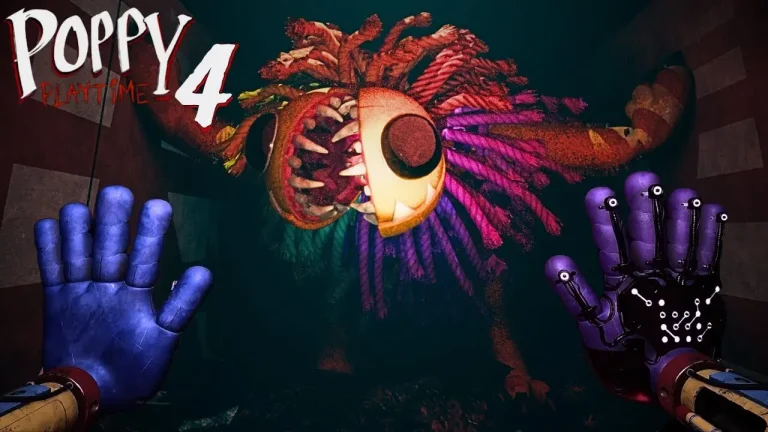
Yarnaby is a trap predator — it does not chase aggressively until you commit.
It waits for:
- noise spikes
- sprint bursts
- Omni-Hand charge
You trigger Yarnaby.
Yarnaby does not trigger you.
Weakness:
It loses line of sight quickly when:
- you break angles
- you use elevation
- you stop sprinting
Counter Strategy:
- Move in short bursts
- Never sprint in long hallways
- Treat corners as reset points
- Avoid charging Omni-Hand while visible
Yarnaby punishes impatience, not players.
Doey the Doughman
Behavior:
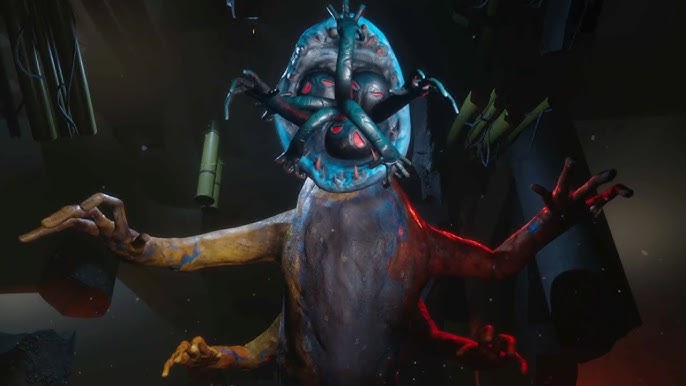
Doey is a space controller.
His job is to force you out of “comfortable” positions.
He thrives in:
- narrow corridors
- choke points
- vents and re-entrance loops
He doesn’t chase like Yarnaby — he herds.
Weakness:
He collapses when the environment is too open.
Counter Strategy:
- When Doey appears → move toward larger rooms
- Don’t try to out-run him in vents
- Use Omni-Hand to force door separation
Doey is a zone denial enemy.
The longer you stay in his territory, the faster you die.
Dr. Harley Sawyer
Behavior:
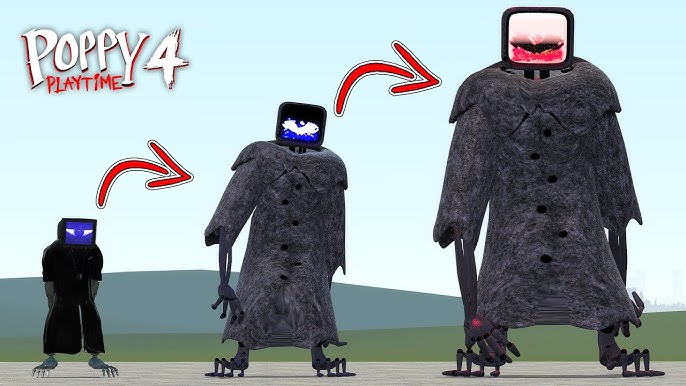
Sawyer is pattern-based.
He watches how you move, then adjusts.
He doesn’t rush you — he predicts.
If you:
- sprint →
- double back →
- hide in loops →
- charge Omni-Hand repeatedly →
He updates his route.
Weakness:
He is slow to adapt when you change rhythm.
Counter Strategy:
- Don’t repeat movement patterns
- Avoid predictable “back to previous room” loops
- Use doors as line-of-sight breakers
- Reset movement tempo after escapes
Fight Sawyer with discipline, not speed.
Some units do not “chase” in the traditional sense. They treat confrontation as training data and become more efficient with every failed attempt to restrain them. When pressure increases, they close distance, eliminate safe paths, and force resolution instead of retreat. This behavior is not instinct — it is escalation logic. Experiment 1170 — Adaptive Escalation is the primary reference model for this class of organism.
General Survival Principles
Safe Haven enemies aren’t “fast monsters”.
They are punishers of bad movement.
Rule 1 — Don’t sprint unless you must
Sprint is a flare gun.
Use it when you need distance, not convenience.
Rule 2 — Never solve puzzles while visible
Charge Omni-Hand behind cover or around corners.
Rule 3 — Short rooms > long hallways
Your best friend: angle breaks.
Rule 4 — Reactions > Predictions
Enemies adapt; you must adapt faster.
Omni-Hand Usage — When It Gets You Killed
Omni-Hand is the strongest tool in Chapter 4.
It is also the fastest way to ruin a run.
Mistake players make:
“Charge, pull, run.”
Enemies listen. You die.
Use Omni-Hand:
- after sightline breaks
- near geometry
- behind machines
- after sound resets
The Omni-Hand is utility, not offense.
Enemy AI Doesn’t Cheat — You Do
People say:
“The AI is broken.”
No.
You are giving them data.
Examples:
- Sprint → Yarnaby wakes up
- Panic loops → Sawyer learns path
- Vent hesitation → Doey squeezes you
- Charge Omni-Hand in the open → free kill
Playing smart =
They have nothing to adapt to.
Mistakes That Kill 90% of Players
Running when scared
Sprint is an alarm, not transportation.
Solving puzzles mid-chase
Chapter 4 punishes multitaskers.
Backtracking too often
Sawyer is built to read loops.
Trying to “fake chase”
Enemies don’t fall for bait; they respond to data.
Pro-Level Movement Patterns
These patterns increase survival chances:
Angle Reset
Move to break line-of-sight → stop → reposition → move.
Silent Slide
Walk → crouch → walk → Omni-Hand → walk.
No sprint.
Door Cut
Open door → cross threshold → close → switch camera angle.
Two-Step Burst
Sprint 2–3 seconds → stop → pivot → slow walk.
Enemies follow speed, not direction.
You break their prediction model.
When to Fight and When to Retreat
You don’t fight enemies.
You deny their objective.
Fight = environmental advantage
- Elevation
- corners
- doors
- vents with exits
Retreat = long hallways
If you run straight, you’ve already lost.
Final Rule of Safe Haven
You are not being chased.
You are being studied.
If you act like prey, all three enemies treat you like prey.
If you act like an operator — controlled, quiet, intentional —
you walk past them.
Summary
Chapter 4’s enemies are not horror decorations.
They are difficulty systems designed to punish:
- panic
- sprint addiction
- predictable movement
- open-space puzzle solving
Players who move quietly and think before executing actions
finish Safe Haven with fewer deaths than “speedrunners”.